Driving Outcomes at Scale: The Government Empowerment Network

Partners




Abstract
With more than 100 million purpose-driven public servants worldwide, governments hold the potential to solve society’s most pressing structural issues.
The Government Empowerment Network (GEN) is a government-led, globally networked, and AI-supported reform accelerator designed to unlock the transformative potential of public servants. While governments manage vast resources and are responsible for the well-being of billions, many public institutions still struggle to translate those resources into better outcomes at scale because of coordination failures, weak accountability, fragmented data, broken incentives, and other foundational bottlenecks. Public servants see these barriers from the inside — and are often best placed to unlock them when they have the space, structure, and support to lead reform. Co-designed with purpose-driven public servants, GEN was launched in 2025 by Instiglio and key partners as a government-led reform accelerator to help mid- and senior-level public servants produce actionable reforms and to build the leadership capabilities and cross-institutional networks that allow governments to sustain reform momentum.
Through a six-month incubator and an AI-powered Empowerment Lab, participants work on live institutional challenges with practical tools, coaching, peer support, and leadership development that help them move from problem diagnosis to reform design, coalition-building, and implementation. Operating across Africa and Latin America, GEN fosters cross-ministerial collaboration and embeds reforms into government systems. Early results show strengthened ownership, data-driven problem-solving, and institutional uptake. By 2035, GEN aims to empower more than 1,500 reform leaders, building a global community of public servants capable of repeatedly identifying and unlocking the institutional bottlenecks that stand between public resources and better outcomes for citizens.
The Challenge
Across the globe, more than 100 million public servants hold the potential to address society’s most pressing challenges. They hold the mandate, know the system, understand the political and institutional realities, and hold the relationships to move change across government, and they remain long after any external partner has left. Yet, they are also often left unequipped, lacking the tools, capabilities, and networks to drive meaningful change.
But the challenge is often not a lack of good ideas or proven models. It is the core systems — coordination across agencies, accountability mechanisms, data-driven decision-making, human resource management — that need strengthening before innovations can take root and deliver on their promise. That kind of foundational work requires intimate knowledge of institutional culture, political dynamics, and bureaucratic processes that only insiders possess.
GEN was built to inspire, equip, and empower these government champions to continuously and sustainably drive greater impact from within their institutions. This model is designed to deliver maximum impact for every dollar, offering a more leveraged and sustainable alternative to traditional technical assistance. GEN implements a globally networked, Al-enabled and government-led reform accelerator.


The Solution
GEN is a globally networked, AI-enabled reform accelerator designed to unlock the most powerful lever for lasting, at-scale impact: the public servants inside governments. Governments manage trillions in public funds and are responsible for the health and well-being of billions, and after years of working on government reform we kept arriving at the same conclusion — for change to be sustained, the people inside government need to be the ones driving it from the start. That conviction led us to launch GEN in July 2025, with support from the Conrad N. Hilton Foundation and Schmidt Futures. GEN was itself shaped by input from more than 100 government leaders who named the gaps they were navigating.
GEN represents a fundamentally different approach to public sector reform. Rather than prescribing interventions or ‘best practices,’ GEN is solutions-agnostic and focused instead on equipping government leaders to tackle the issues most meaningful to them and their communities. Through a structured six-month reform incubator complemented by an AI-powered digital Empowerment Lab, GEN provides champions with diagnostic tools, leadership development, peer learning, and expert support. Champions are supported as they:
- Select real challenges tied to government priorities;
- Diagnose root causes, not just symptoms;
- Assess reform pathways that have the highest potential return for policy outcomes;
- Design solutions grounded in data, evidence, and political feasibility;
- Build coalitions and secure senior sponsorship; and,
- Graduate with reform agendas in-hand, that can be carried forward into budgets, plans, policies, or other coordination mechanisms.
The goal of GEN is dual: to produce actionable reforms, and to build the leadership capabilities and cross-institutional networks that allow governments to sustain reform momentum long after any single incubator ends. By bringing together mid- and senior-level public servants across multiple ministries, GEN creates trusted spaces for problem-solving, peer exchange, and joint reform efforts. This addresses a critical gap in traditional capacity-building programs, which often focus on individual skill development without building the relationships, incentives, and shared accountability necessary for systemic change.
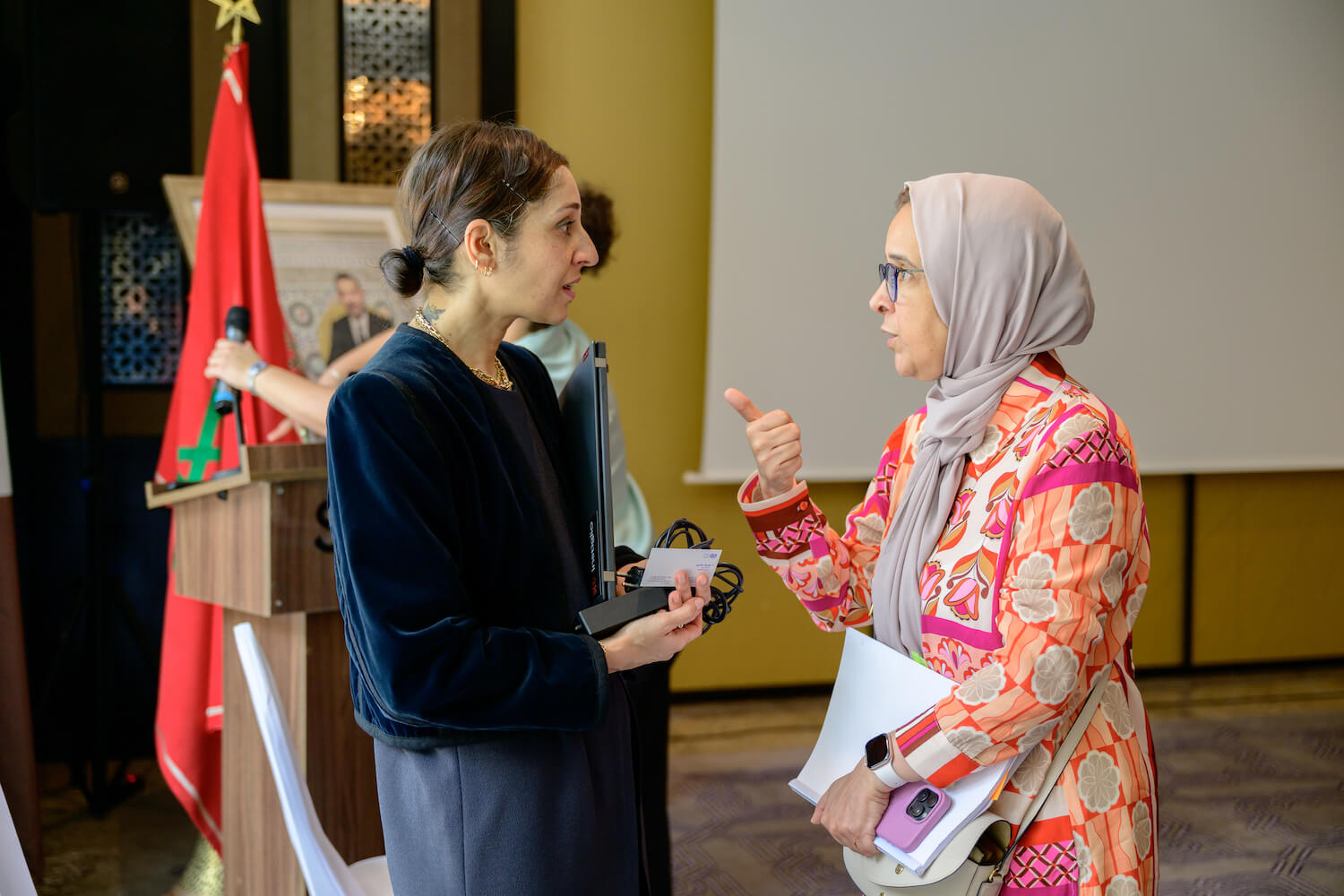
Uganda’s inaugural cohort launched in July 2025 with 34 champions from six ministries including the Ministries of Public Service, Finance, Gender, Education, Water and the Office of the Prime Minister. GEN has continued to grow; the network launched in Latin America with 33 champions from Colombia and Ecuador, expanded with its inaugural Morocco cohort, and expansion to new countries is currently in process. From the start, the model has demonstrated potential with promising early results.
Champions have begun tackling the kinds of foundational bottlenecks that determine whether public systems can deliver at scale — from weak coordination and fragmented data to limited accountability, broken incentives, and execution gaps across sectors such as education, water, and public financial management. The cross-ministry design enables many to step beyond formal mandates and tackle constraints that no single institution could address alone. GEN-backed solutions are moving from reform ideas into the government machinery that matters: ministry plans, senior leadership discussions, budget processes, and coordination mechanisms that can sustain implementation beyond the incubator.
The model has been elevated to national decision-making platforms, and multiple ministries have requested to join future cohorts, signaling expanding ownership and system-wide demand. Partners, including major donors, view GEN as a credible, locally-led approach aligned with their governance and institutional strengthening priorities.
GEN’s theory of impact is grounded in the recognition that sustainable public sector transformation takes time—and that it starts with people. GEN focuses on shifting mindsets, strengthening leadership and delivery capabilities, and embedding reforms into government systems through budgets, policies, and coordination mechanisms. Equally central is the creation of a global peer community: champions learn not only from experts, but from one another—across ministries and across countries—reinforcing confidence, accountability, and shared ambition. As Uganda’s experience illustrates, when government champions are trusted, connected, and supported to lead, they can drive locally owned transformation more effectively and durably than externally imposed approaches. With the engagement of new partners like LGT Venture Philanthropy and Grand Challenges Canada, GEN is positioning itself as a scalable, government-led platform for nurturing the next generation of reform leaders worldwide.
Namisi Derrick, Uganda Ministry of Education and Sports
The Impact
● In its first year of implementation, GEN engaged more than 90 champions across 4 countries in a structured approach to drive their own reform efforts in areas such as health, education, and governance.
● By 2035, GEN aims to have empowered more than 4,000 public servant champions and their teams, leading to an accumulation of more than 500 transformations and reaching more will have catalyzed 500 million people receiving more effective, coordinated public services.