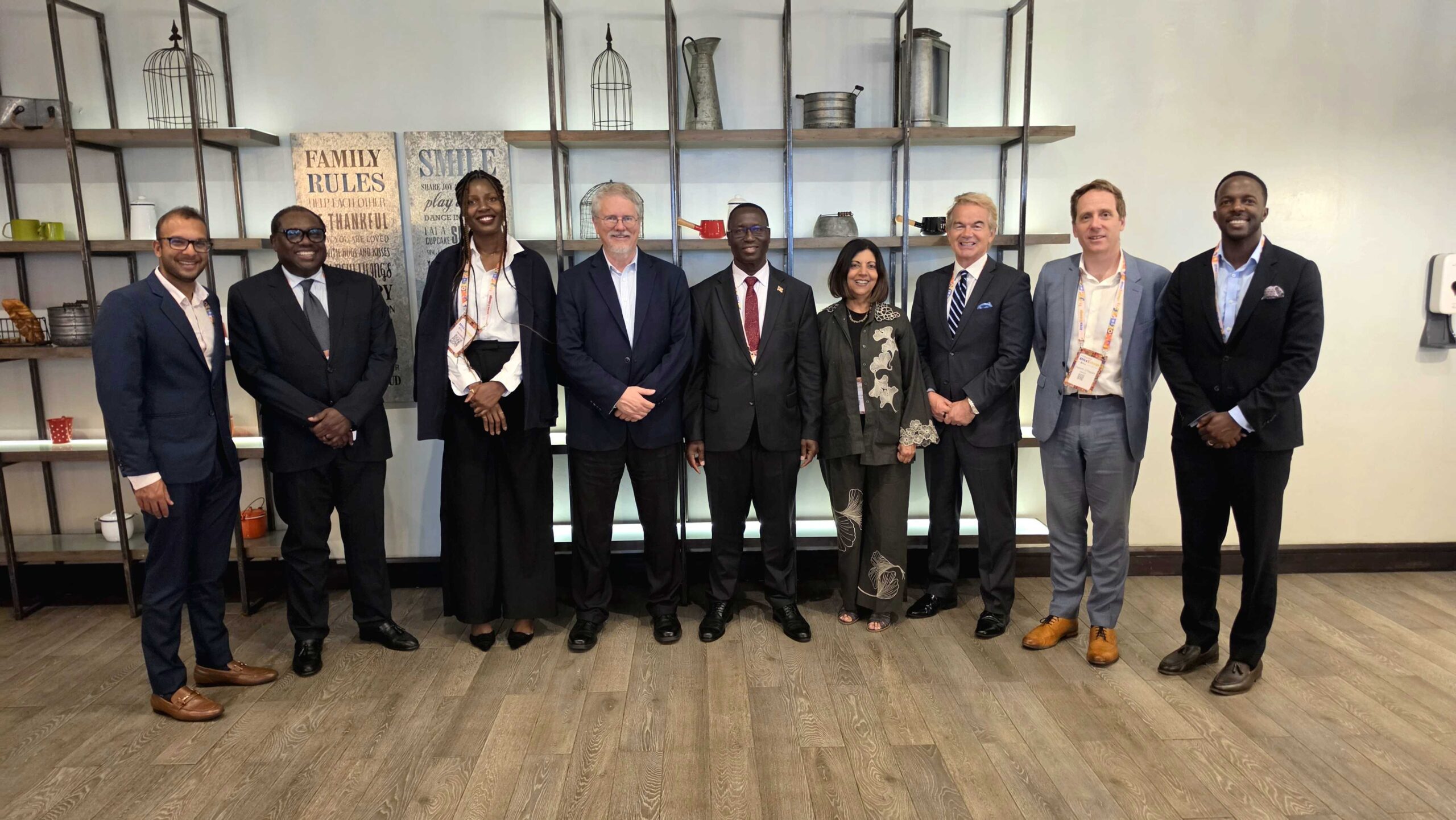
Instiglio joined government, philanthropy, and development finance leaders at AfricaXchange 2026 for an insightful discussion on what it takes to scale outcomes through public systems.
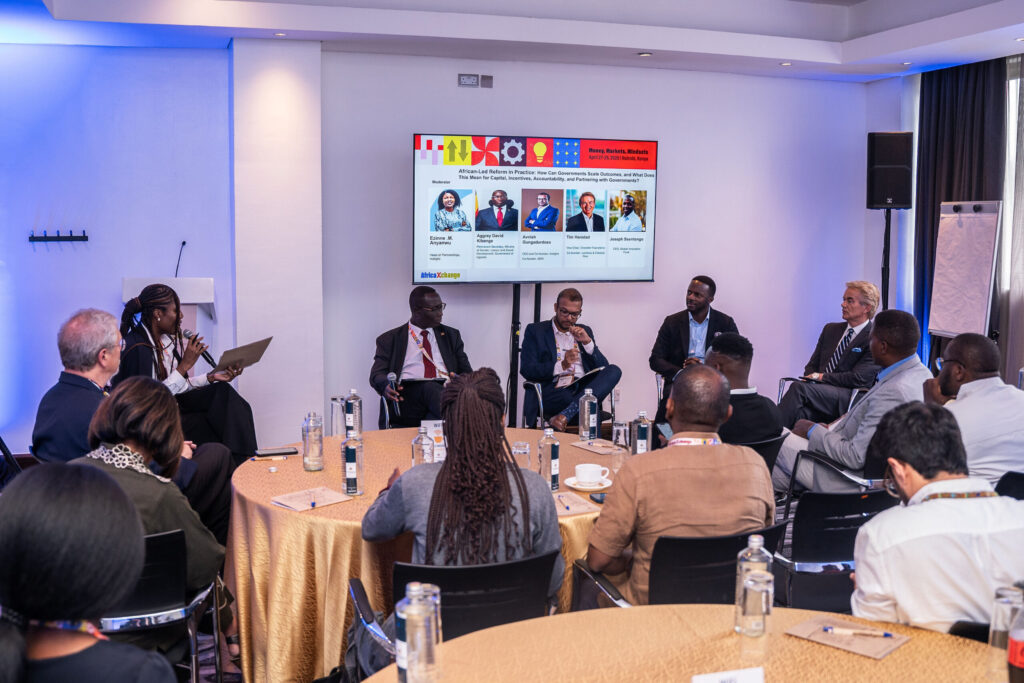
Instiglio co-hosted a high-level round table with the Conrad N. Hilton Foundation at AfricaXchange 2026 titled “African-Led Reform in Practice: How Can Governments Scale Outcomes, and What Does This Mean for Capital, Incentives, Accountability, and Partnering with Governments?” The session brought together leaders from government, philanthropy, development finance, and systems reform to explore how African governments can drive reform from within public systems, how capital and partnerships must be structured to support that work, and what mindset shifts are required to move from delivering to government toward delivering through government.
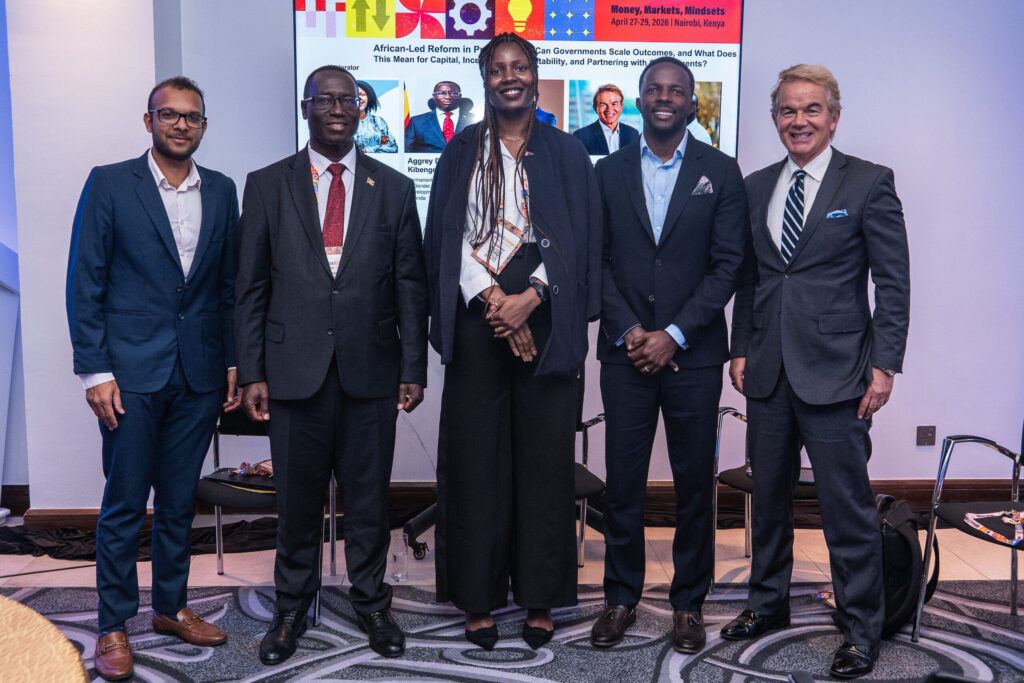
The session, moderated by Ezinne Anyanwu, Head of Partnerships in Africa at Instiglio featured Aggrey Kibenge, Permanent Secretary of the Ministry of Gender, Labour and Social Development of Uganda; Avnish Gungadurdoss, CEO and Co-Founder of Instiglio and the Government Empowerment Network; Joseph Ssentongo, CEO of Global Innovation Fund; and Tim Hanstad, Vice-Chair of the Chandler Foundation.
African-led Development through Government-led Reform
Against a backdrop of tighter funding, shifting aid flows, and growing pressure to deliver sustained outcomes with fewer resources, the session focused on a central question: How can development actors support reforms that are led, owned, and sustained by African governments themselves?
Panelists emphasized that African-led development must be understood not only as local ownership, but as transformational leadership from within public institutions. This means supporting public servants as they diagnose implementation challenges, build coalitions, navigate political and institutional realities, and translate reform priorities into budgets, policies, and accountability mechanisms.
As Permanent Secretary Aggrey Kibenge reflected,
“Reform is not only about the right policies or strategies. It is also about translating intent into action across systems that are complex, resource-consumed, and politically dynamic. To achieve the desired reforms, sustained leadership and strong political backing will be essential.”
A key takeaway from the discussion was that sustainable impact depends on strengthening government capability, rather than creating parallel delivery structures. Panelists highlighted the importance of working through public systems, where reforms can be absorbed into institutional processes and scaled over time.
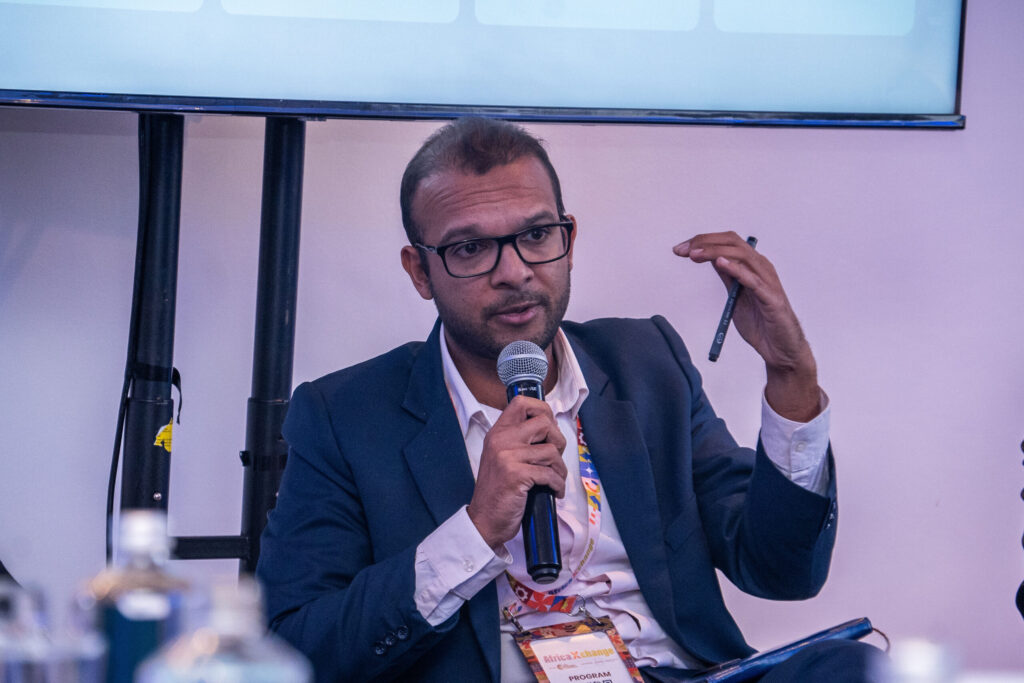
For Avnish Gungadurdoss, this requires a shift in how external partners engage with government.
“When coming from the outside, with great ideas of what government could be doing differently, and with evidence-based models backed by substantial support, you try to intervene in the system,” he said. “After doing that for a number of years, [at Instiglio] we have learned interventions that succeed are those with champions inside the system, who help navigate and own, both intellectually and emotionally, the reform process.”
This perspective was echoed throughout the session. Reforms are more likely to endure when they are led by public servants who champion the initiatives. Officials who understand the institutional landscape, mobilize internal coalitions, and are positioned to carry changes forward beyond the life of any one project or partnership. This includes mindset changes or political will mobilization to incorporate innovative approaches to the traditional working landscape of public institutions.
Rethinking Capital, Incentives, and Partnerships
The panel also explored what this shift means for funders, philanthropies, development finance institutions, innovators, and technical partners. Speakers emphasized that capital must be structured not only to fund activities, but to enable the conditions for reform inside government. This means strengthening leadership, coordination, execution capacity, adaptive learning, and accountability skills of public servants.
Joseph Ssentongo underscored the importance of understanding government systems when supporting innovations that aim to scale through the public sector.
“While innovative business ideas require assembled proof points that they work, for them to be absorbed into government systems an understanding of the market, fiscal constraints, budget cycles, and priorities within the public sector is essential,” he said. “We remain careful when working with innovators pursuing a public sector route to market to ensure there is a clear understanding of the pathway to scale, whether it is realistic, and whether there are champions within the public sector system to support it.”
The discussion also reinforced the central role of governments as long-term stewards of social and economic outcomes. As Tim Hanstad noted,
“Governments are the most important collaborator in determining both the social and economic outcomes of people. They possess human and natural resources, broader implementation reach than any other institution, and accountability to citizens that NGOs and funders don’t typically have.”
These reflections highlight how important it is to understand the dynamics and constraints of public systems, as well as the priorities and capacities of the teams that mobilize these institutions. As one participant observed during the discussion, “you can’t wish government away.” Taken together, the discussion pointed to a broader shift in how development actors partner with governments: moving from delivering to government toward delivering through government, listening first and actively to government priorities and helping create the conditions for institutional adoption, stronger capability, and sustained delivery over time.
The Government Empowerment Network as a Practical Model
During the conversation, panelists reflected on the Government Empowerment Network (GEN) initiative as one example of how development partners can support government-led reform and impact at scale. GEN is a globally networked, AI-enabled reform accelerator designed to unlock the most powerful lever for lasting, at-scale impact: the public servants inside governments. GEN brings together solutions-oriented public servants (champions) and their teams, and provides them with the knowledge, networks, and support they need to address institutional challenges within their own governments.
In Uganda, GEN launched in July 2025 in partnership with the Ministry of Public Service, bringing together more than 34 champions from six ministries. During their journey, champions addressed priority challenges, from data-driven decision-making for teacher deployment and water access to improved coordination for refugee and host-community service delivery. GEN is demonstrating a new approach to government change, one driven by leadership and technical skills and peer-developed and co-created solutions. Several government-led reform and action plans designed during the GEN cohort are already being integrated into ministry plans and budgets, illustrating how government-led change can be strengthened through capability, collaboration, and practical problem-solving.
A Call to Deliver Through Government
Panelists pointed to a shared conclusion: achieving sustainable, scalable impact requires a fundamental shift in how the development ecosystem partners with governments. Development actors must move from being primary drivers of service delivery to facilitators of government capability, reform leadership, and long-term accountability by leveraging governments’ strengths and addressing its gaps.
As speakers emphasized, the future of African-led development depends not only on more financing but also on better-structured capital, stronger public institutions, and partnerships that support governments in leading reform from within.